
As cloud, AI and digital services accelerate, data centres are becoming one of the most mission-critical and energy-intensive infrastructure segments worldwide.
For data centre operators, uninterrupted power, operational visibility, energy efficiency and infrastructure resilience are essential to uptime and business continuity.

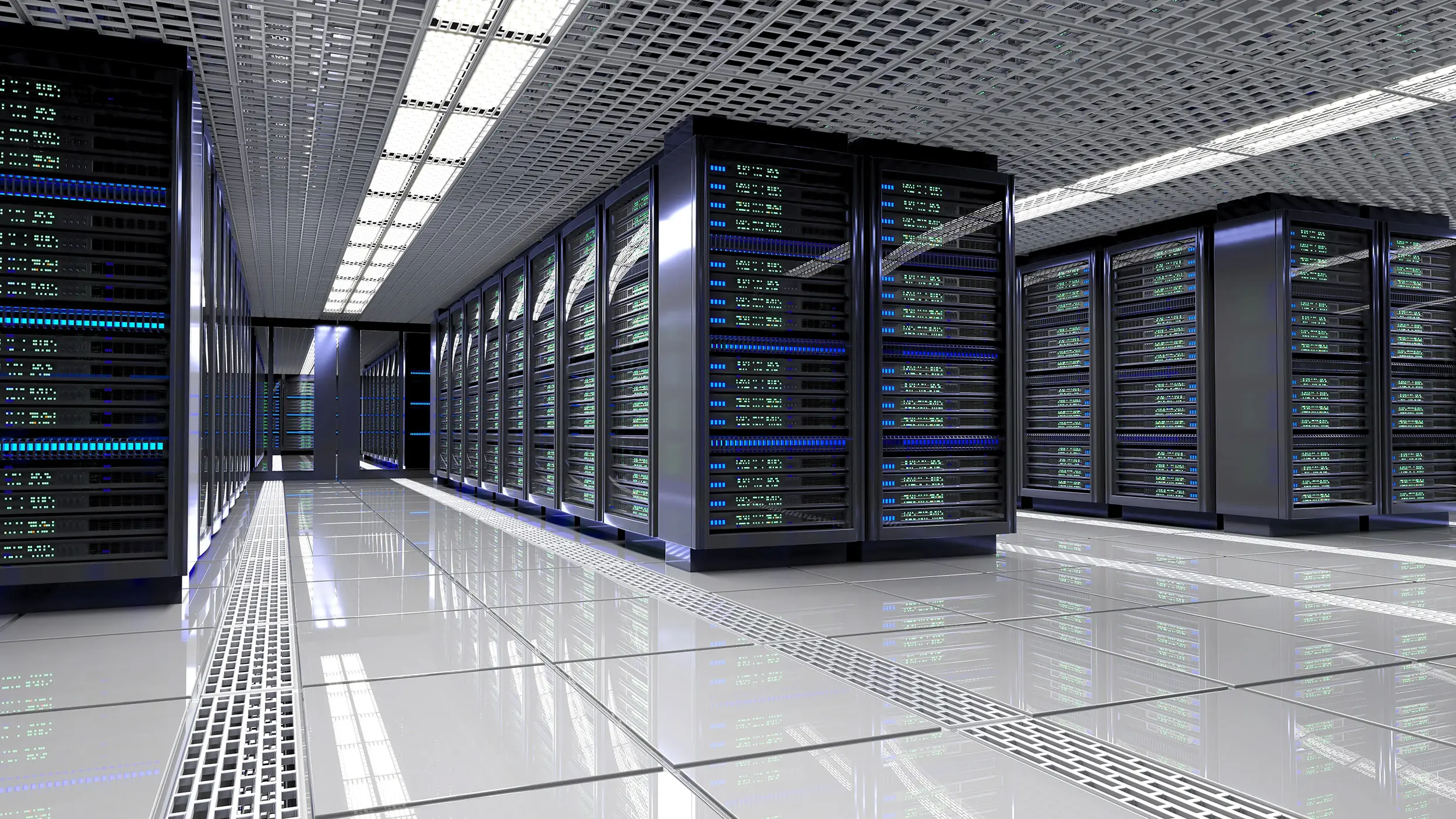
Data centres rely on continuous and stable electrical power to support their operations. Reliability and availability of power are of critical importance.
Zero tolerance for downtime
Data centre services need to operate continuously, with any interruption affecting customers, applications, transactions and business continuity.
Critical dependency on electrical infrastructure
Power disturbances, voltage instability, frequency deviations or equipment failures can affect IT loads, auxiliary systems and facility operations.
Increasing operational complexity
AI workloads, higher power density and expanding infrastructure increase the complexity of maintaining stable and predictable operations.
Control systems complexity
As data centres scale in power density and operational complexity, basic or fragmented control and monitoring systems may limit visibility, responsiveness and reliable coordination between critical infrastructure systems.
Unplanned downtime can disrupt digital services, create financial losses, affect customer confidence and expose operators to contractual penalties. In mission-critical data centre environments, even short interruptions can have significant operational and reputational consequences.
 ENHANCING RELIABILITY, AVAILABILITY AND UPTIME BY:
 Systems integration and optimisation for improved reliability, system responsiveness and long-term supportability
Stable operation under demanding conditions
Resilient architectures that support continuous operation and fast response to abnormal conditions
Continuous power availability is one of the most critical requirements for data centre operations. Redundant primary and backup power systems must respond instantly and reliably on any abnormality.
Grid instability and power interruptions
Data centres depend on stable utility power, but grid disturbances, outages or power-quality issues can threaten service continuity.
Complex backup power designs
Generators, UPS systems, battery systems and automatic transfer systems must operate in a coherent and coordinated manner.
Increasing backup power requirements
Higher IT loads and AI-driven demand increase the required scale, responsiveness and reliability of emergency power infrastructure.
Power instability or failure of backup systems can lead to service interruption, equipment stress, operational disruption and loss of uptime. In data centres, backup power is not a secondary function; it is a core component of business continuity.
ENSURE POWER CONTINUITY AND BACKUP SYSTEM RELIABILITY BY: Control and monitoring solutions for prime and emergency / standby generator systems, supporting reliable power availability
Design and deployment of Power Management Systems that coordinate power sources and critical loads
Support of reliable transitions between normal and backup operating modes
Strengthening resilience through engineered redundancy and coordinated system response
Reduced risk of single-point failures
Data centres are becoming major electricity consumers. Their growth places increasing pressure on grid connections, power availability, energy cost and infrastructure planning.
High and growing electricity demand
AI, cloud computing and high-performance computing increase power density and total facility demand.
Grid connection constraints
Large data centre loads may face delays, capacity limitations or operational restrictions due to local grid constraints.
Power quality and stability requirements
Data centres require high-quality, stable power to protect sensitive IT and facility systems.
Need for flexible power architectures
Operators increasingly need to coordinate grid supply, on-site generation, battery storage and, where applicable, renewable energy integration.
Insufficient power capacity, grid limitations or unstable electrical infrastructure can delay projects, increase operating costs and affect long-term competitiveness.
STRENGTHENING POWER SYSTEM RESILIENCE BY: Design and implementation of coordinated power control systems
Management of grid supply, on-site generation, storage and critical loads to support stable and resilient operation
Integration of on-site and backup power assets into a unified operational environment
Strengthened operational awareness through power-quality monitoring and system diagnostics.
Data centres operate as complex environments where subsystems such as electrical infrastructure, backup generation, UPS systems, cooling systems, fire protection, building management systems and monitoring platforms must operate together.
Multiple systems from different vendors
Data centres often rely on separate systems for power, cooling, safety, monitoring, UPS, generators and building management.
Lack of unified control philosophy
Fragmented systems can create control gaps, duplicated alarms and limited coordination between critical subsystems.
Difficult real-time coordination among multi-vendor systems
Harmonised logic and communication across critical subsystems may be absent or limited.
Increasing system complexity
As facilities expand, system coordination becomes more difficult without a unified engineering architecture.
Fragmented architectures can delay response to critical events, reduce operational visibility, increase engineering complexity and create risk during disturbances or expansion projects.
UNIFYING FRAGMENTED SYSTEMS INTO ONE ENGINEERING ARCHITECTURE BY: Integration of critical systems into a coherent operational environment
Systems integration expertise for complex infrastructure environments
Improved coordination across interconnected systems
Data centres are long-life infrastructure assets that must evolve continuously as technology, load requirements and operational expectations change.
Need for expansion without disruption
Data centres may need to expand capacity while maintaining live operations.
Unsupported systems in existing facilities
As technology evolves rapidly, control, protection and monitoring systems may become difficult to maintain, integrate or scale over time. In older data centres or expanding campuses, unsupported systems can increase maintenance risk, limit future scalability and reduce operational resilience.
High cost of full replacement
Replacing entire systems can be expensive, disruptive and operationally risky.
Need for future-ready infrastructure
Facilities must be able to integrate new technologies, higher loads, energy storage and advanced monitoring over time.
Failure to scale infrastructure properly can increase reliability risks, maintenance costs and operational limitations.
RETROFITTING AND ASSET LIFE EXTENSION BY: Solid experience of retrofits in active, mission-critical environments and proven operational continuity
Strengthened maintainability through reliable technologies and lifecycle support
Scalable and flexible systems, capable of evolving with the facility
Support for higher power density and new infrastructure layers